If you can't explain it simply, you don't understand it well enough. ~Albert Einstein

Showing posts with label waves. Show all posts

Sunday, January 19, 2014

Week 21: Waves Recap

Okay so last week we should have concluded our studies on waves, but due to the great questions in our breakout sessions and testing, I will move our test to a later date. This week will be devoted to our review and presentations.

 If you need study guides, please go back to the posts in your Edmodo classrooms.

Last week I posted visual unit guides that you are more than welcome to use in preparation of the test (tentatively rescheduled for this Friday).

Enjoy your day off on Monday and see you back on Tuesday.

PLEASE NOTE: Our agenda for this week will be posted on Monday evening.

Our Agenda this Week:
(The schedule changes to match the needs of my students.)


MONDAY
TUESDAY
WEDNESDAY
THURSDAY
FRIDAY
GIFTED
No School
Sound Wave Project PresentationsSound Wave Project PresentationsSound Wave Project PresentationsSound Wave Project Presentations;
Waves Standard Projects
REGULAR
No School
Waves Standards ProjectWaves Standard ProjectsWaves Standard ProjectsWaves Unit Test
Next Week:   Magnetism  

Saturday, November 16, 2013

Week 15: What is a Wave?

What better way to start Week 15 by looking at Chapter 15! Our topic is Waves and for the next several weeks we are going to focus on sound and electromagnetic energy through sound and light waves.  It is important to remember what sound and light energy are so that we can transfer our learning of those ideas to new material.

VOTW: wave, energy, medium, mechanical wave, vibration, transverse wave, crest, trough, longitudinal wave, compression, rarefaction, amplitude, wavelength, wave speed, frequency, hertz (Hz), electromagnetic wave


Here is a video that I have already created that I encourage you to review in preparation for this week.


We will address most of these topics the first part of this week. The latter part of the week will be spent in the computer lab.


Our Agenda this Week:
(The schedule changes to match the needs of my students.)


MONDAY
TUESDAY
WEDNESDAY
THURSDAY
FRIDAY
GIFTED
Intro to Waves Notes
Intro to Waves NotesIntro to Waves NotesComputer Lab: Waves Lab & Reflection Blogs
Energy Standards Project Due
Computer Lab: Waves Lab & Reflection
REGULAR
Intro to Waves Notes
Intro to Waves NotesIntro to Waves NotesComputer Lab: Waves Lab & Reflection Blogs
Energy Standards Project Due
Computer Lab: Waves Lab & Reflection Blogs
Next Week:  Thanksgiving Break

Friday, January 4, 2013

Catching the Sound Wave

Before I dive into sound waves perhaps I will share a TV episode on sound waves.  Do you remember Ms. Frizzle? Sure you do! She made learning scientific topics quite fun.  Check out her students at the sound museum and everything they learn about sound.


How was that? What about those really big vocabulary terms Ms. Frizzle used throughout the show! Now can you answer these questions?

1. How does sound travel?
2. What is the difference between low and high sounds?

I put together some images that we will discuss in class, but only as it relates to more common everyday experiences that you go through.

 When sound waves reflect it is called echoing. I am sure you have heard your voice bounce back at you a time or two.  What about when your one place and you hear a sound from another place? Perhaps, you can recall a time when you were walking down one hall, but could hear voices in another hall.  When sound goes through a narrow opening and spreads out it is called diffraction.  When the sound moves around a barrier, it is also called diffraction.
 Now, I sure you remember when your parents come to your room and have to tell you to turn your music down.  Well why is it that the sound in your room is much louder than the sound outside your room and you haven't even touched the volume?  This is where your walls play a role.  While the intensity of the sound within the room is high, as the sound travels some of it is absorbed (taken in like water in a sponge) into the walls. This makes the sound on the outside of the room less intense.
Before I tell you more about pitch and frequency, check out this link and see what influences these aspects of a sound. Then when you are done with that link, check out this one as well. When you are done with that link, then check out the simulation below, by clicking the link provided.

Sound
http://phet.colorado.edu/en/simulation/sound
Click the link below to begin.

I have put together a quiz for you to try. It will be up each week of this unit.  How much do you know about sound waves? Link to test...


I found another website that shares similar information, but I have annotated it so that you can focus on the key areas. Click here!


Have you ever wondered about the why the sound changes from a siren as it passes by? Watch this video!


Music versus Noise:  What is the difference between the two? The answer is here!

Surprise, Surprise! Here is a podcast from a small group of students talking through the Properties of Waves lab assignment.  Have a listen!


Alright, back to sound waves.  I just came across this new application where you can watch 20 second segments of video and answer comprehension questions.  Are you up for a challenge? Go ahead and play and let me know your score! Good luck!


Okay, if you have made it to the bottom of this screen then here is something extra special for you.  Below is an infographic with a general idea about what we will learn about sound.  Remember you will get all the details in class, but you will have at least one more tool in your learning power pack.

(c) M. Prince, 2013
You can download a copy here!

Sunday, December 16, 2012

Colors, Colors, Everywhere

In this post, we are going to spend a bit more time with color--light and pigments.  By now when you hear the words reflect and absorb, each should have new meaning to you. Now what happens when we mix colors from either type?


http://edtech2.boisestate.edu/eckela/images/Light-vs-Pigment2.gif

Have you ever wondered why a stage looks white when all the stage lights are not white?
 
http://www.showproaudio.net/Theatre_Lighting_Large.jpg
Perhaps, you were able to use the color mixing guide for light in the image above this one to answer my question.

Transmission, Reflection, and Absorption
We already know that the color of an opaque object is the color that it reflects. The color of a transparent or translucent object is the color that it transmits. What exactly does this mean? This means that the color of an object depends on the light that shines on the object and the light that that bounces off or is transmitted through the object. 

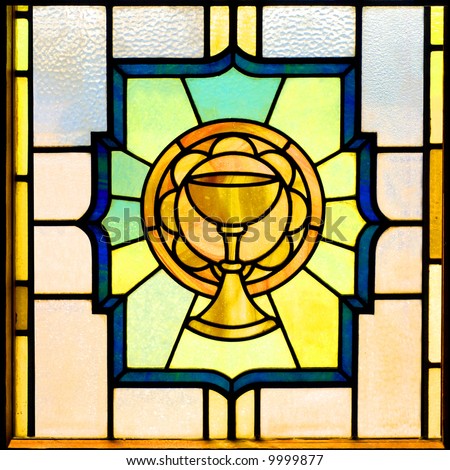
Look at the two windows below.  The first window (which is transparent) is only transmitting white light because it allows all colors of light to pass through. However, the stained glass handles light a bit differently.  The color of the glass determines what colors will be transmitted through.  In other words, green blades of grass in the stained glass only transmit green light and absorbs all others.  So what colors of light are transmitted through the trophy in the stained window glass? 
http://fiveashrenovations.com/images/window.jpg

This takes us into the topic of color filters. I am sure you have seen color filters one time or another, but what happens when a color filter is placed in front of an object? A couple of things actually occur.  Can you tell from the pictures below what happens? (These pictures should look familiar as they were taken from the textbook.)


The images show the red filter only allows red light waves to transmit or pass through while it absorbs all others. As a result, the red on the apple is reflected and still looks quite red behind the filter.  However, the apple leaves don't appear green behind the filter.  Instead they appear black. You can see what happens when the color filter is changed to green and then blue.  In these cases what colors would be absorbed, transmitted, and reflected?

I guess before I wrap this subject up we should just address two more things. Is there really such a thing as black light? What happens to objects when there is no light?

For question one, check out this informative website.  As far as the second question is concerned, let's revisit the first image on this post.  When you mix any or all of the colors of light, none of the combinations make black light. So why do objects appear black, especially at night?  Well the answer is simple.  Objects appear black because there is an absence of light.  What? That's right! This means that there are no available colors of light reflecting off of the object, therefore, the object will appear to look black.  Remember to see color, the cones and rods in our eyes need to absorb and focus the light waves to determine the colors we see.  Without the light filtering into our eyes, our eyes will not be able to pick up the colors on the object.

Over the last final days of this semester, we will be engaging in light lab activities. You will need to take all that you have learned and connect it to the activities.  Before I wrap up, I spent some time sharing these images created with an iPhone, a prism, and a spectroscope. How about you share what you learned about these items and what they have to do with light with your parents. You can also make your own spectroscope  by following the directions found here.
Created with a spectroscope (The light is focused and then passes through a prism inside the spectroscope.)

Created with an iPhone and an equilateral prism (The objects are located to the sides of the front-facing camera.)


Sunday, December 9, 2012

Do You See What I See?

Said the science teacher do her science class, "Do you see what I see?"

Okay, okay so we probably can't break into chorus right now, but our title does highlight the focus of this post.  We have finished our reading about how the eye sees visible light in terms of different wavelengths.  This post will go in depth about how light interacts with the objects that we see.

First let's get 3 terms out of the way: transparent, translucent, and opaque.

Creative Commons License

Objects that are transparent --> glass, window, water bottle, clear wrap
(You are able to see right through the object once light interacts with it.)
Objects that are translucent --> sheer material, wax paper
(You are able to see that something is behind this type of material, but may not always be able to make out every aspect of the object because as the light passes through it is being scattered throughout.)
Objects that are opaque --> suitcase, handbag, construction paper, comforter, desk, school portrait, aluminum foil, concrete)
(These objects either reflect light or absorb it. As stated in last week's post, objects that absorb light energy usually convert that energy to thermal energy)

Are these clouds opaque, translucent, or transparent?

(c) M. Prince, 2012
(c) M. Prince, 2012


Now, how exactly are we able to see the things that we see?

(c) M. Prince, 2012
 Once light shines on an object, our eyes gather and focus the light so that we may be able to see it.  Eyes are able to transmit, refract, and respond to different wavelengths of light.  This small section of light that we can see is visible light.  Our lenses help us to focus on an object. Light is refracted (bent) from an object to the cornea of our eye.  The light then passes through the pupil and the lens. The iris that surrounds our pupil opens and closes to direct the amount of light we take in through our eyes.  Once the light hits the retina at the back of our eyes, it hits the rods and cones which respond to both light and color of the objects   The rods and cones send signals to the option nerve that helps the brain to interpret the images we are seeing.

(c) M. Prince, 2012
The color that we see on the object is the color that is being reflected.  For instance, the eye images are focusing on a tree.  We are able to see the green leaves and the brown trunk because The colors that make up green are being reflected while all other colors are being absorbed. The same is said for the brown we see on the tree trunk.


How do we see the color on many objects?
The electromagnetic spectrum is a wave with many frequencies.  Remember the longer the wavelength, the lower the frequency.  The shorter the wavelength, the higher the frequency.  Now almost in the middle of the electromagnetic spectrum is a very small section of wavelengths that is just the right size for the human eye to see.  This section is called visible light as previously stated.

Colors of Light vs. Colors of Pigments
http://www.diycalculator.com/imgs/console-09.gif
Did you know that your eye can only detect three colors of light? Well, it's true.  Your eye picks up red, green, and blue (see image above).  Your brain helps you mix those three colors to get yellow, magenta, cyan, and of course, white.  The colors that you see on the images in your television screen.  Now every time you see a white image on the TV screen, you will know all the colors that help to make up that image's color.

Now while you may be able to mix all those colors to get white light, I highly do not recommend that you get your paint set and mix all those colors up to get white.  It simply won't work! Pigment colors do not produce the same colors when mixed.  In school, you have been told that your primary colors are red, blue, and yellow also, right? Well, that is not exactly true.  The primary colors of pigment are yellow, cyan, and magenta. Magenta and yellow make up red, while magenta and cyan make up blue.  When you mix all these colors together you get black, which is quite different from colors of light being combined.

This begs the question: How exactly can you create black from the colors of light? The answer to this is quite simple. In order to see black, it requires that absence of light.  Think about it: If you remove all light-producing objects in your room, close your bedroom door and windows, the only thing you will see are black objects. Give it a try!

Here's a website that covers a great deal of information on Light and Color.

Can you answer the questions for last week's post now?
1. What is the color of George Washington's white horse?
2. Why do you suppose we can only see black at night?
3. What is the difference between colors of light and colors of pigment?
4. How does light interact with different materials?

Making Waves Lab
It took the entire week to do this lab. I have some students who volunteered to share their discoveries and understandings from this lab.  Be on the lookout for this upcoming student podcast!

I had a wonderful time sitting down with several groups this week to "listen in" on what they learned about the properties of waves and the relationship between speed, wavelength, and frequency.

Here are a few videos I created on measuring waves that you may find helpful. While doing this lab, we have to find the speed of the wave by calculating the distance of each wave (4m) by the time it took in each trial.  Once we found the speed of each wave, we could then calculate for the frequency, by substituting what we already knew (speed and wavelength) and setting up our formula (frequency = wave speed / wavelength).  The three videos show us how to generally solve for the unknown.


Sunday, November 25, 2012

Electromagnetic Waves and Rattlesnakes

Did the post title grab your attention? How on earth can there be a connection between the two? Well, let's start our study of light waves and before I am done you will know what rattlesnakes have to do with light! Are you ready? Let's begin.

Electromagnetic waves carry energy from the sun through empty space. We benefit from electromagnetic waves for a number of reasons.  However, exposure to too much electromagnetic radiation can be harmful. We will get into these things in a few moments.

First, let's start with watch an electromagnetic wave is composed of. When we looked at electromagnetic waves we learned that they are composed of transverse waves.  Two transverse waves overlap--one consisting electrical energy and one consisting of magnetic energy--hence the term electromagnetic.

(c) Prince, 2012

The high points on the transverse wave are called crests, while the low points are called troughs. These are two of the main characteristics of transverse waves.  Energy travels perpendicular from the force applied. In other words, as the force applied moves in a vertical direction while the energy travels horizontally.

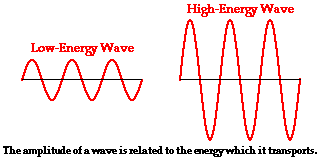
The amplitude of the wave is the distance between the rest position of the wave and the crest or the rest position and the trough. The greater the distance, the greater the energy.  The shorter the distance, the lower the energy in the wave. In the image below, are two examples between the relationship between amplitude and the amount of energy in a wave. The black line represents the rest position of the wave.

Source: The Physics Classroom, 2012
Now amplitude is not the only way that waves appear different from one another.  Wavelength and frequency play a role in how waves appear differently.  Wavelength is the distance between two corresponding parts (crest to crest or trough to trough). The frequency of waves is the number of waves that pass a given point during a certain amount of time. There is a relationship between wavelength and frequency. Do you see it? What happens to the frequency of waves when the distance between two corresponding parts is great? What happens when the wavelength between those two corresponding parts is small?  Wavelength and frequency are inversely proportional.  This means that the longer the wavelength the shorter the frequency and the shorter the wavelength the greater the frequency of waves that pass through a given point.
Source: Science News for Kids, 2008
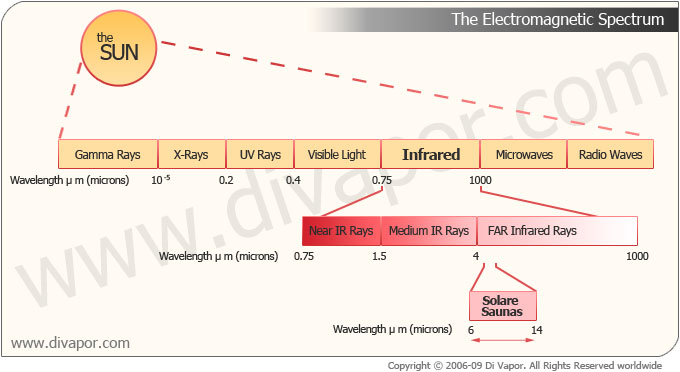
Waves at different wavelengths must have different purposes right? Well of course they do!  Have you heard of the electromagnetic spectrum? First let's define spectrum.  A spectrum is an array of entities ordered based on magnitude (Dictionary.com, 2012).  The electromagnetic spectrum is an array of light waves organized from largest wavelength to smallest wavelength. The longest wavelengths are called radio waves, while the smallest wavelengths are gamma rays.

These are only two of the several types of electromagnetic waves. Observe the following images.  What do you see as the source of electromagnetic waves or energy?  As we have discussed before, the sun is the source of electromagnetic waves (also known as electromagnetic radiation or electromagnetic energy).
Source: Di Vapor, 2009
Source: Lawrence Berkeley National Laboratory, n.d.
Radio waves are the longest electromagnetic waves in the spectrum.  We are able to listen to broadcasts and use our microwave ovens at this wave length.

Microwaves are the next in line and these waves are popular in police radars or scanners.  This allows police officers to determine the speeds at which vehicles are traveling.

Infrared waves are waves are heat waves.  We use these waves to help us change the TV channel with a remote. This type of wave is also useful in the military when night vision is required to locate people.

Visible light is next and perhaps the one to which you are most familiar.  These are the colors of the rainbow, which exist at different wavelengths themselves within the spectrum.  We will spend some time talking about visible light over the course of the next couple of weeks.

Ultraviolet rays are another popular type of wave that you are familiar with because it is one we always here of when we need to avoid is when outdoors.

X rays allow medical professional to observe issues with your bones.  The waves that radiate through the body pass through the human tissue, but become absorbed by the bone and foreign objects allowing doctors to determine the health of your bones.  Have you ever wondered why you need to wear that heavy lead aprons? Well the whole body does not require exposure to the radiation from X rays because it can damage organs in your body.  The apron is a way of protecting yourself from any unnecessary exposure to these light waves.

Gamma rays are the shortest and last of the light waves in the electromagnetic spectrum. These waves also have the highest frequency of all the waves along the spectrum.They are generated from nuclear reactions and radioactive material.  While these types of waves are known to be used in the killing of cancer cells, too much exposure is not good as well.

Source: Super Coloring, n.d.
At the beginning of this post, I said that there was a connection between the electromagnetic spectrum and rattlesnakes. Are you ready to find out what that connection may be?  Well, I like to use creative ways to remember the waves in the electromagnetic spectrum.  One mnemonic device that seems to work well has to do with rattlesnakes.  While I absolutely hate snakes, I really like this catchy statement:

"Rattlesnakes May Inject Venom Under eXtreme Grief."

The bold letter in each word represents one of each of the waves along the spectrum from greatest wavelength to shortest wavelength.  Use this method to remember the order of the waves in the electromagnetic spectrum.

I think this is enough information to get you started.  In the next post, I will talk about how light waves behave, the variables that affect the speed of light waves, and how light waves interact with opaque, translucent, and transparent materials.


Happy Learning!


Monday, November 21, 2011

December 12 - 16

We will resume the Wave unit after the holiday break. This week will will recap the year by working on the Standards Project.  There are no CRCT pink slips until after the break. There are no journals this week.

Monday - Vocabulary Test
Wednesday  - Science Midterm

Waves Week 3 Agenda

December 5th - Start notes on EM Waves;  3rd period turns in CRCT 9 and receives CRCT 10. 


December 6th - Start Wave Characteristics Notes; 4th  period turns in CRCT 9 and receives CRCT 10. 

December 7th - Early Release/No Science Help Session; Continue notes from yesterday; 5th  period turns in CRCT 9 and receives CRCT 10. WavesTown activity is due

 
December 8th - 3-5 pennies due today.Foldables Activities (Penny Pyramid and Venn Diagram 3-Tab); 6th  period turns in CRCT 9 and receives CRCT 10.

December 9th - Human Eyes PPT; Journals 25-28 Due. Science Literacy Reports Due (3rd only)

Reminders: Vocabulary Test (12/12); Midterm (12/14); Standards Project (12/12 - 12/16)


Waves Week 2 Agenda

Get Adobe Flash player


Monday & Tuesday - Introduction to Waves PPT
Wednesday - Water Observational Lab
Thursday - EM Waves video & WavesTown Activity
Friday - EM Waves PPT

CRCT Pink Slip #8 is Due: 
Monday - 3rd
Tuesday  - 4th
Wednesday - 5th
Thursday - 6th
CRCT Pink Slip #9 will be passed based on due date schedule.

Homework: Study vocab for test, CRCT Pink slip, Journal entries 25 & 26 (Students will pull 2 more topics from the list provided here.) Science Literacy Articles and Reports (Advance students only)

Saturday, November 12, 2011

Week 1 of Waves Unit


PLEASE NOTE: Starting this week, the calendar will only show when something is due. Students are REQUIRED to copy down the agenda in class for each day.  Every student MUST bring their agenda to class daily. 
Monday:
3rd – Share their Sports Energy Fashion Show Presentations
4th – Unpacking Standard S8P4 (See GPS tab above)
5th - Unpacking Standard S8P4 (See GPS tab above)
6th - Unpacking Standard S8P4 (See GPS tab above)
3rd - CRCT Pink Slip #7 is due & #8 distributed

Tuesday:
3rd - Unpacking Standard S8P4 (See GPS tab above); Index Cards Due
4th – Vocabulary Cards à Index Cards Due
5th – Vocabulary Cards à Index Cards Due
6th – Vocabulary Cards à Index Cards Due
4th - CRCT Pink Slip #7 is due & #8 distributed
This unit is vocabulary heavy (like chemistry unit) and for students to be successful, they must study vocabulary cards each night.

Wednesday:
3rd – Vocabulary Cards à Index Cards Due
4th – Finish Vocabulary Cards
5th - Finish Vocabulary Cards
6th - Finish Vocabulary Cards
5th - CRCT Pink Slip #7 is due & #8 distributed

Thursday:
All – Introduction to Waves Notes
6th - CRCT Pink Slip #7 is due & #8 distributed

Friday:
All – Introduction to Waves Notes (Continued)

ONGOING HOMEWORK
Journals 23 - 24 (Topics are located HERE).  Entries must contain all required components to receive an overall grade of 70% or higher. Please use the updated checklist that has been provided on my website.  These directions are repeated throughout the week as reminders to students.
CRCT Pink Slip #7
Study 20 minutes each night (focus on the vocabulary)
3rd only à work on Science Reading Reports (The PDF file you need to fill out is Helpful Links section.)

Tuesday, January 4, 2011

Happy New Year

Hello everyone! I hope everyone is well rested and ready to get off to a strong start.  For the next few weeks, we will learn about sound and light.  Our test will be around the 28th of this month.  Journals start today for the new marking period.  The Science Text Reports also start from today and will be due March 4th. Conference week will be March 14-18 in case you need that for planning purposes.  Please check my blog frequently so that you can stay up to date with what's going on in science.  Thanks again for your continued support and I look forward to another great semester!

This week:
Tuesday- Unpacking S8P4
Wednesday- Unpacking S8P4, Video on Waves
Thursday - Waves Pretest & Graphing
Friday - Guided Reading Workbook (Please bring your workbook to class today!)